The bank a single
trader lost
On 26 February 1995, London's oldest merchant bank, founded in 1762, declared itself insolvent. It had lent to states and financed wars. It was brought down by the bets of a twenty-eight-year-old posted in Singapore.
An error account that became a chasm
In Singapore, Nick Leeson ran the trading floor of Barings Futures and, unusually, supervised its back office as well. He therefore both dealt and recorded his own transactions. Officially he was arbitraging between Nikkei index futures listed in Osaka and those on Singapore's Simex, an activity held to be risk-free, feeding on small price gaps. In fact he was taking large directional positions, betting on the stability of the Japanese index. His losses he parked in an error account opened in 1992 and numbered 88888, absent from the statements sent to London.
On 17 January 1995 the Kobe earthquake sent the Nikkei tumbling. Rather than close out, Leeson doubled up, buying more in the hope of lifting the index. On 23 February he fled. On the 26th Barings declared itself insolvent: losses came to about £827 million, more than the bank's own capital. On 6 March the Dutch group ING took it over for a symbolic £1 and injected £540 million to pay the creditors. Leeson, arrested in Germany and handed over to Singapore, was sentenced there in December 1995 to six and a half years in prison.
The most troubling part is not the concealment but what it required in plain sight: to meet the margin calls on his hidden account, Leeson asked London for very large transfers, and London sent them. Nobody wondered why an arbitrage business supposed to carry no risk was swallowing a growing share of the group's cash.
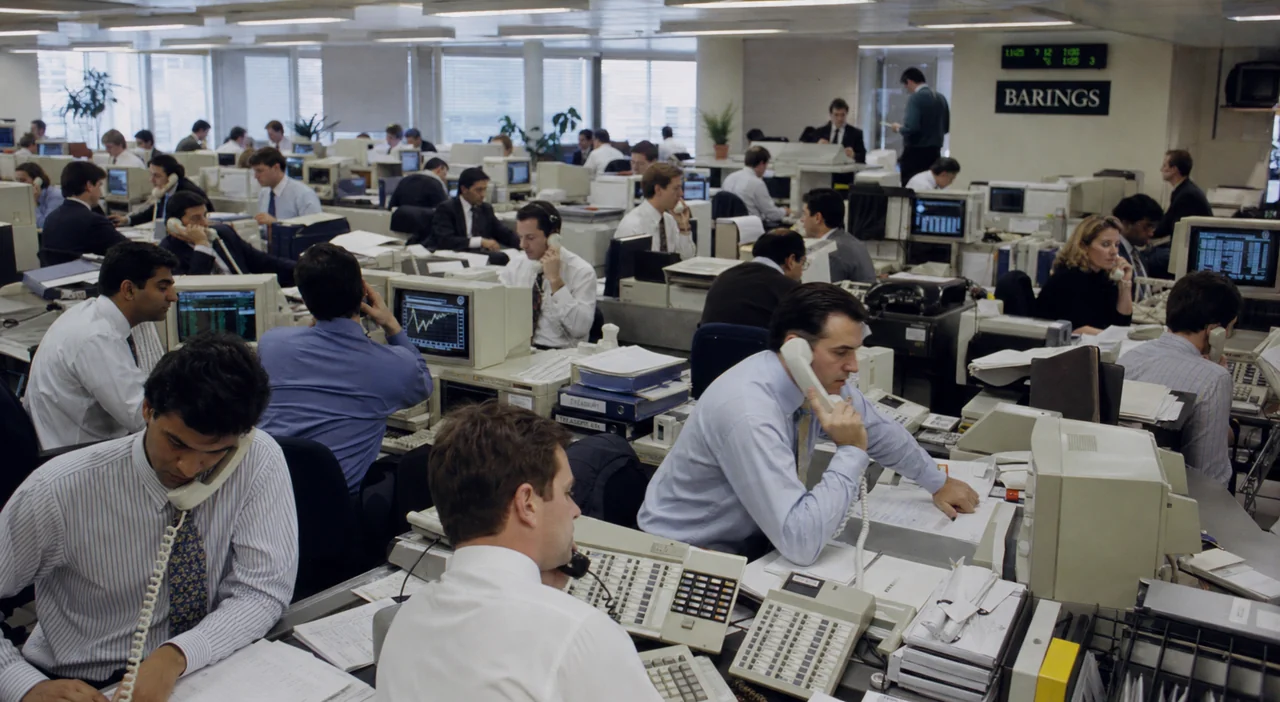
The risk was not in the market
None of Leeson's positions was sophisticated. What killed Barings was not an exotic derivative but an elementary failure of organisation: the same person placed the orders and recorded them. Separating front office from back office is not administrative housekeeping; it is what stops an error from becoming a lie, and a lie from becoming a bankruptcy. The official inquiry laid before the British Parliament concluded that internal control and supervision had failed, not that the market had struck.
The affair lastingly shifted supervisors' attention toward operational risk, the risk that comes from procedures and people rather than from prices; the Basel accords would make it a category in its own right. The lesson, though, keeps having to be relearned: Société Générale in 2008 and UBS in 2011 replayed the same score, a lone trader, controls bypassed, losses found too late.
A bank of two hundred and thirty-three years did not die of a market, but of a missing control.