The decree that closed
Europe to British goods
On 21 November 1806, from his headquarters in Berlin, Napoleon declared the British Isles in a state of blockade and banned all trade with them. Lacking a fleet able to defeat the Royal Navy, he chose to strike the adversary in its markets.
Beating a navy with a tariff
Since Trafalgar in 1805, France could no longer hope to win at sea. Napoleon turned the weapon around: if London ruled the oceans, he would close the continent to its goods. The Berlin Decree forbade all trade and correspondence with the British Isles, declared lawful prize any English good or any good from its manufactures and colonies, and refused the ports of the Empire to ships coming directly from England. British subjects found in occupied or allied countries were made prisoners of war.
The system hardened year after year. The Milan Decree of 1807 treated as British any neutral that called at a British port or paid British duties, and London replied with its Orders in Council. The Trianon tariff of 5 August 1810 taxed colonial goods up to 50% of their value; duties on cotton rose from 60 francs a quintal in 1806 to 120, 400, even 800 francs depending on origin. The emperor himself issued licences, at 600 to 800 francs, that let some merchants get around the ban he had laid down.
With cane sugar growing scarce, the emperor turned to the beet. According to the historian Pierre Branda, a decree of 1809 ordered 32,000 hectares put under cultivation, and another, in 1812, raised the target to 100,000. By the end of 1812 barely 6,785 hectares had been planted. Coffee, for its part, was poorly replaced by chicory.
A weapon that wounds its bearer too
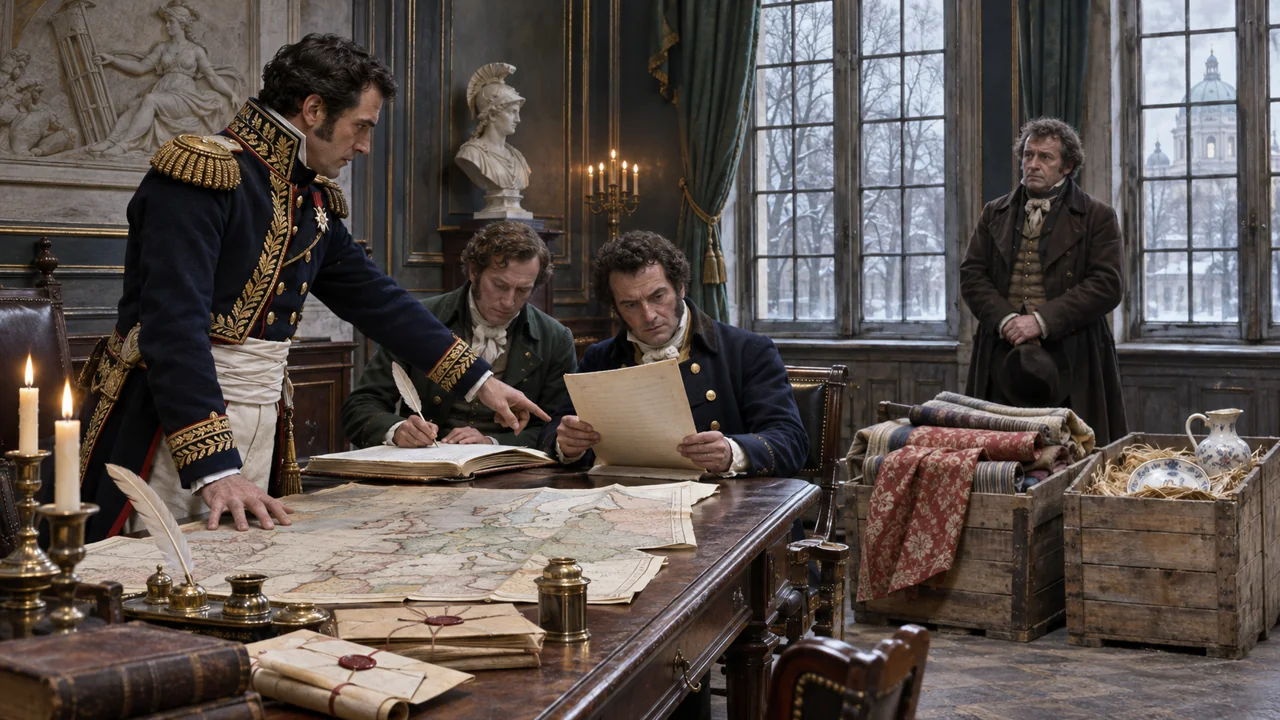
The blockade shows that an embargo also strikes the one who decrees it. Marseille, Bordeaux and La Rochelle saw their traffic fall, the prices of staple foods rose across much of Europe, while the industrial north and east gained from the absence of British competition, notably in textiles. Smuggling flourished, at times with the complicity of the rulers Napoleon had himself installed; Britain settled on Heligoland, occupied in September 1807, and on Malta to move its goods.
British exports to the continent fell by 25 to 55% against the years before 1806, yet the United Kingdom's economy suffered no major damage; the crisis of 1810-1812 weighed more heavily. To make the ban hold, ever more coastline had to be controlled. Russia reopened its trade with London in 1810, which is often counted among the reasons for the invasion of 1812. The blockade ended only in 1814. Today's debates on sanctions and tariffs raise the same question: who really pays the price of a trade war, and how long does a ban hold against those who lose by it?
An embargo holds only as long as its neighbours agree to pay for it.