The Wednesday
sterling gave way
On 16 September 1992, sterling left the European Exchange Rate Mechanism, two years after joining it. In a single day Britain raised interest rates, announced a second rise, then gave up, beaten by a market more powerful than its reserves.
A parity the market refused to believe
On 8 October 1990 the United Kingdom joined the European Exchange Rate Mechanism, the waiting room for the single currency, with sterling set at 2.95 marks and allowed to fluctuate by 6% around that rate, a floor of about 2.78 marks. The bet was to tie British inflation to the discipline of the Bundesbank. But reunified Germany was financing its reconstruction on credit and the Bundesbank kept rates high, while the British economy, in recession, needed low ones.
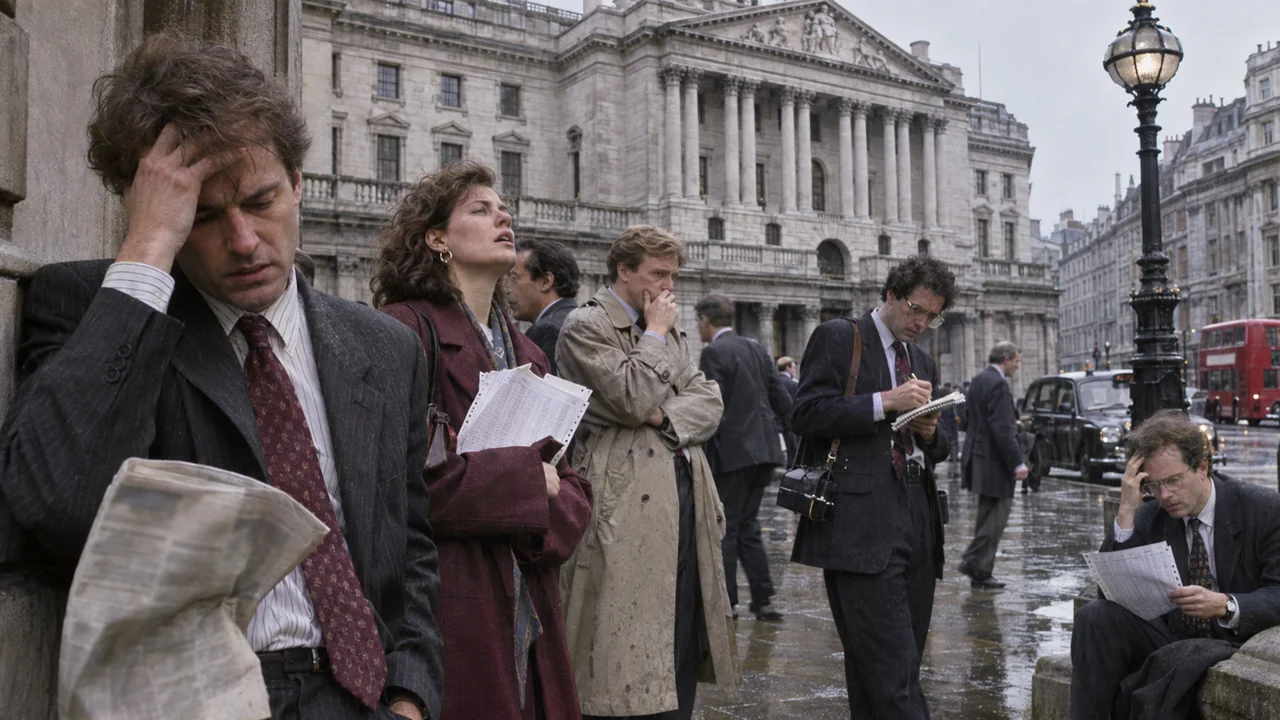
In autumn 1992 currency dealers judged the parity untenable and sold sterling. On 16 September the Bank of England bought it in unprecedented quantities, the government raised the base rate from 10% to 12%, then announced a rise to 15%. Nothing worked: that evening Chancellor Norman Lamont announced that sterling was leaving the mechanism. The rate fell back to 12% the same night and to 10% the next day.
Holding a parity requires being ready to pay more than the market is ready to bet against you. A 15% rate was strangling an economy in recession, and speculators could wager that the government would not hold for long: their bet was asymmetric. If sterling held, they lost little; if it broke, they won a great deal. George Soros's Quantum Fund is reported to have made a profit of about one billion dollars.
The price of a parity defended in vain
The Treasury put the cost of the operation at £3.14 billion in 1997, a figure revised to £3.3 billion in 2005 after official documents were released; earlier estimates ran as high as £27 billion. Beyond the numbers, the episode illustrates what economists call the trilemma: a country cannot have a fixed exchange rate, free movement of capital and an independent monetary policy all at once.
Freed from the constraint, sterling depreciated and rates could fall. In the following weeks the country adopted an inflation target, a framework that would precede the independence of the Bank of England in 1997. Some Conservatives even renamed the day "Golden Wednesday," so clear was the recovery. The debate over its political legacy remains open, but the economic lesson stands: a fixed parity lasts only as long as the market believes the state will pay to defend it.
A pegged currency is worth what the state is willing to pay to keep it there.