The Sunday the dollar
stopped being gold
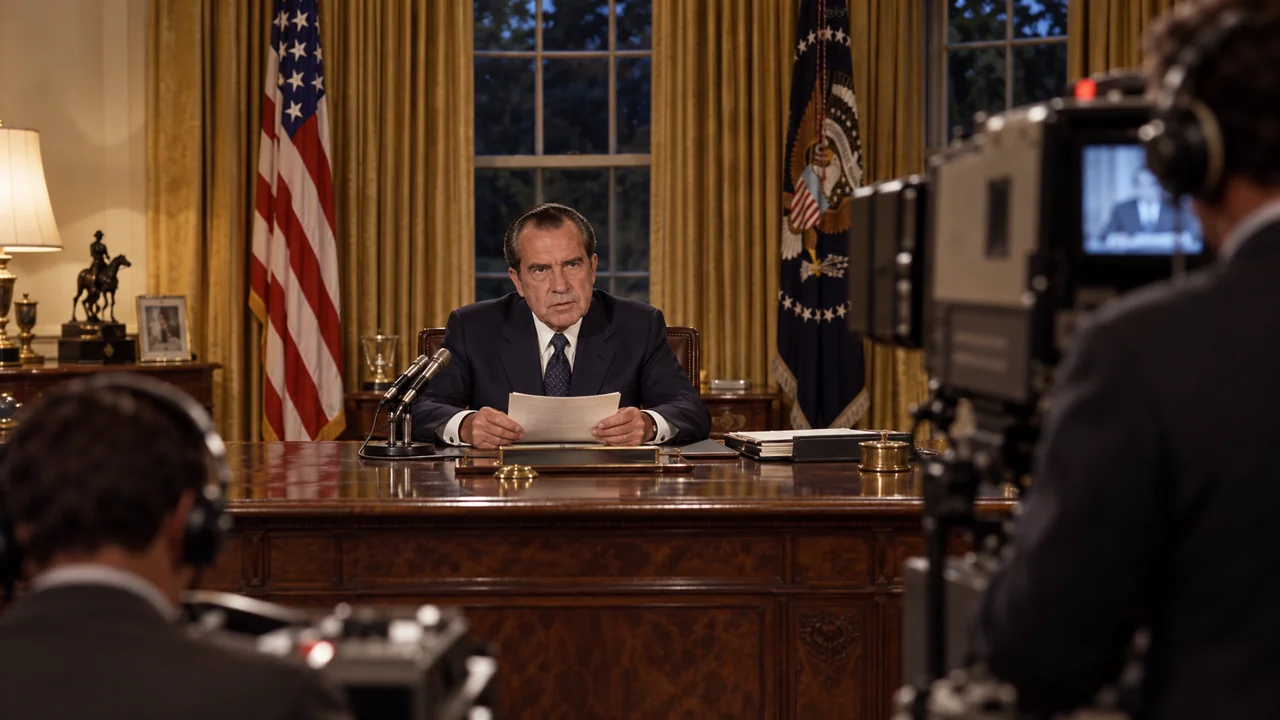
On the evening of Sunday 15 August 1971, Richard Nixon announced on television that the United States would stop exchanging dollars for gold. He meant it as a temporary measure while the system was reformed; it turned out to be permanent.
A window shut over a weekend
Since 1944 the Bretton Woods system had rested on a promise: a dollar was worth gold at a fixed $35 an ounce, and foreign central banks could swap dollars for metal at any time. Other currencies were pegged to the dollar. As long as America held most of the world's official gold, the promise held. By the 1960s, dollars held abroad had come to exceed US gold reserves, and every request for conversion became a threat.
On 11 August 1971 the United Kingdom asked for $3 billion of gold to be moved from Fort Knox to the Federal Reserve in New York. On the 13th Nixon gathered some fifteen advisers at Camp David, among them Arthur Burns, John Connally and Paul Volcker. On Sunday evening, with the markets closed, he announced three measures: closing the gold window, freezing wages and prices for 90 days, and a 10% surcharge on imports. They were the first wage and price controls imposed outside wartime.
The striking detail is the timing. The decision was prepared in three days by a small circle, without warning allies, and announced on a Sunday so that markets would have time to absorb it before Monday's opening. It has been called the "Nixon shock" ever since.
When money no longer promises metal
In December 1971 the Group of Ten met at the Smithsonian Institution in Washington. The dollar was devalued by 7.9%, gold went to $38 an ounce and the surcharge was dropped. The arrangement did not last: a further 10% devaluation was announced on 14 February 1973, and most major economies then let their currencies float.
The world thus moved to a regime in which no major currency rests on a weight of metal any more, but on trust in the economy and institutions behind it. Exchange rates became market prices, which helps explain the growth of currency hedging and derivatives. The debate over gold as a reserve of last resort has never stopped: can a currency do without an external anchor?
A promise of convertibility is only worth something until someone comes to test it.