The queues outside
Northern Rock
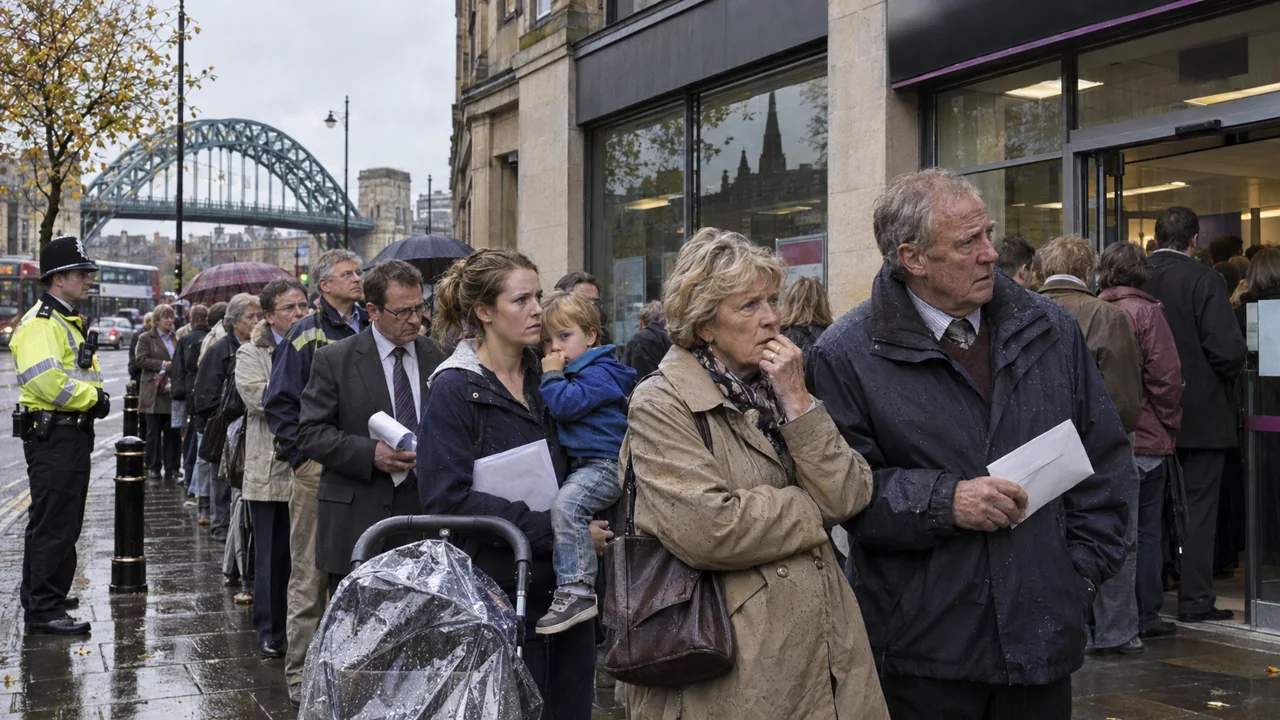
On Friday 14 September 2007, British savers queued outside Northern Rock's branches to withdraw their money. The United Kingdom had not seen such a bank run since Victorian times.
A bank funded by the markets
A former Newcastle building society that became a listed bank in 1997, Northern Rock ranked among the country's five largest mortgage lenders. Its growth rested on an unusual model: roughly three quarters of its funding came not from customer deposits but from wholesale markets, notably the securitisation of its loans through the Granite vehicle. When the US subprime crisis froze those markets in the summer of 2007, the bank could no longer refinance itself.
It turned to the Bank of England. At 8.30 pm on Thursday 13 September, the BBC revealed the request for emergency support; the deal was announced at 7 am the next day. Meant to reassure, the news did the opposite: depositors crowded into the branches. About £1 billion was withdrawn on the Friday alone, some £2 billion within four days. On Monday 17 September, Chancellor of the Exchequer Alistair Darling announced that the government would guarantee all deposits, and the queues melted away. The bank was nationalised on 22 February 2008.
The deposit guarantee then in force explains the rush. It covered the first £2,000 in full, then only 90% of the next £33,000, and payment could take months. A saver could therefore lose part of their money even below the ceiling: withdrawing first was the rational choice. From 1 October 2007, cover rose to 100% up to £35,000.
The real run was not at the counters
The queues were only the second act. The decisive run had happened earlier, when institutional investors stopped lending to the bank, with no camera to film them. Northern Rock illustrates maturity transformation risk: funding twenty-five-year mortgages with money that must be rolled over every few months. As long as the markets lend, the model is profitable; when they close, it becomes untenable overnight.
The episode also showed that a partial guarantee does not reassure. The reforms that followed, full cover below a ceiling, fast payout, Basel III liquidity ratios, all aim to make panic pointless rather than to forbid it. One question remains, made pressing by instant payments: does a bank run still need queues?
A bank stands for as long as no one doubts they could leave it.