The corner undone
by a rule change
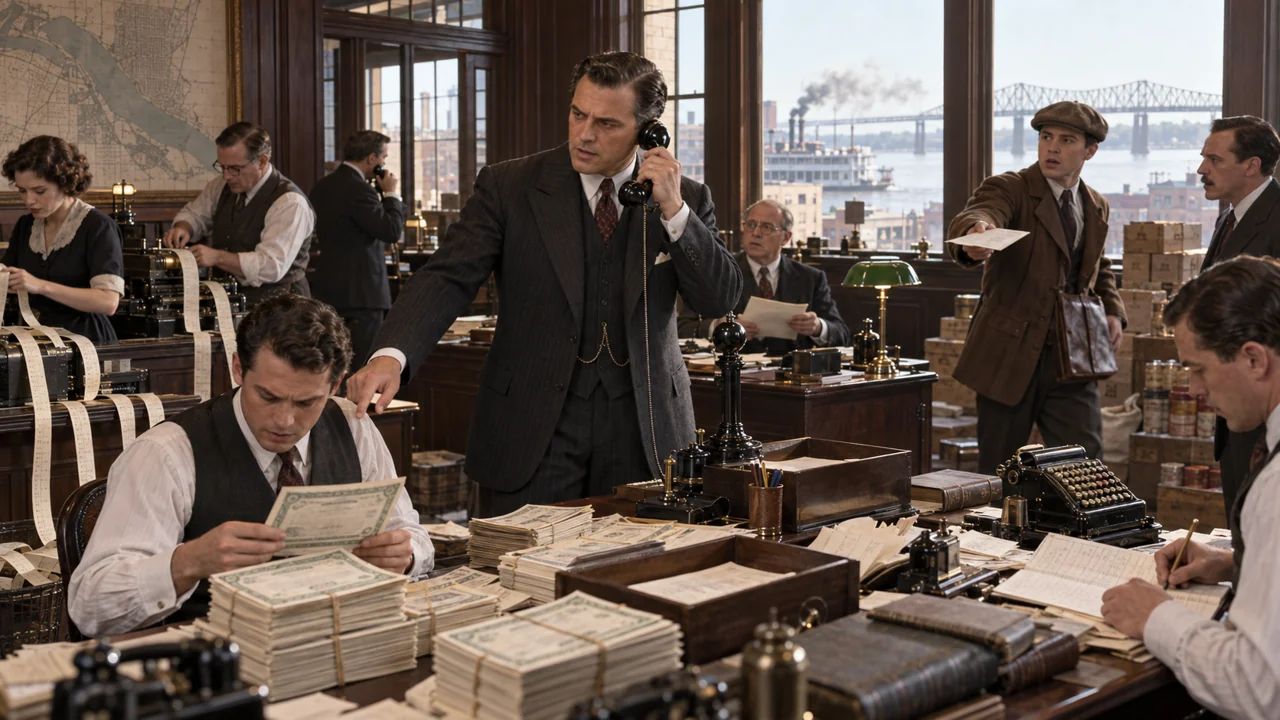
On 20 March 1923 a Memphis grocer called in forty-two thousand shares of his own company, lent out to short sellers. The stock went from $75 to $124 in a few hours. By the evening the New York Stock Exchange had halted trading, and it then stretched the delivery deadline. The morning's winner would be ruined before the autumn.
One man's corner
Clarence Saunders had opened the first self-service grocery store in Memphis in 1916. By 1923 the Piggly Wiggly chain counted 1,267 outlets, and the stock had been listed in New York since February 1922. In the autumn of 1922 the failure of a few independent franchises in the East gave Wall Street operators their opening for a bear raid: the price fell back to $39. Saunders borrowed ten million dollars from Southern bankers and set about buying up his own capital.
By March 1923 he held orders for some 198,000 of the 200,000 shares outstanding. At the same time he had let his brokers lend those shares to the very people selling them short. On 20 March he called in forty-two thousand of them. Exchange rules gave the shorts twenty-four hours to deliver. With no shares to be had, the price climbed from $75 to $124 over the morning.
A few hours later the exchange suspended trading. On 22 March it struck the stock from the board, on the grounds that such a concentration of holdings made a free market impossible. On 23 March Saunders settled at $100 a share. He was left with about five million dollars of debt and more than a hundred thousand unsellable shares. In August he handed his creditors his stock, his cars and his pink marble mansion; personal bankruptcy followed a year later.
The decisive move was not a trade but a change of rule: the exchange gave the short sellers five days instead of twenty-four hours to deliver, and shares poured in from around the country. Saunders believed he had more than twenty-five thousand shares sold short in front of him. The exchange counted 11,200.
Whoever owns the deadline owns the position
A corner is not won by owning the shares: it is won by owning the date. So long as the short seller must return a borrowed share at a fixed moment, whoever holds the goods names the price. Saunders held the goods, but not the calendar. The calendar belonged to a private institution whose governing committees were made up of the brokerage houses themselves, judge and party at once. It would take the crash of 1929 for a public regulator, the Securities and Exchange Commission, to be created in 1934.
The other lesson is about information. Saunders fought without knowing the size of the position he was attacking, and he was wrong by a factor of two. The measurement of short positions and securities loans is still not an ordinary piece of market data: it is settled by rule, and it is contested.
Saunders owned nearly every share; he did not own the rule that set the delivery date.