The bank that
governed an island
On 23 April 1407, the Republic of Genoa gathered its debts into a new institution, the Casa di San Giorgio. Its creditors became its administrators and, half a century later, the bank was governing Corsica and Genoa's trading posts on the Black Sea.
Creditors turned sovereigns
In the early fifteenth century, Genoa emerged exhausted from its wars with Venice. Its debt was scattered across many loans, the compere, each secured on a particular tax. In 1407 the authorities merged them into a single body, the Casa delle compere e dei banchi di San Giorgio. The claims became transferable shares, the luoghi, and their holders chose the officers who collected the tax revenues that paid the interest.
From 1408 the Casa also opened a deposit and transfer bank for Genoese citizens; it closed it around 1445 to devote itself to serving the state, and reopened it to the public only in 1530. Meanwhile its role had changed in nature. In 1453, unable to defend its distant possessions on its own, the Republic handed its officers the government of Corsica and of the Black Sea trading posts, including Caffa in the Crimea, which the Ottomans would take in 1475.
Machiavelli, in his Florentine Histories published in 1532, saw in it a case no philosopher had ever imagined: liberty and tyranny, integrity and corruption living side by side among the same citizens. He added that if San Giorgio ever came to govern the whole city, Genoa would become a republic more remarkable than Venice.
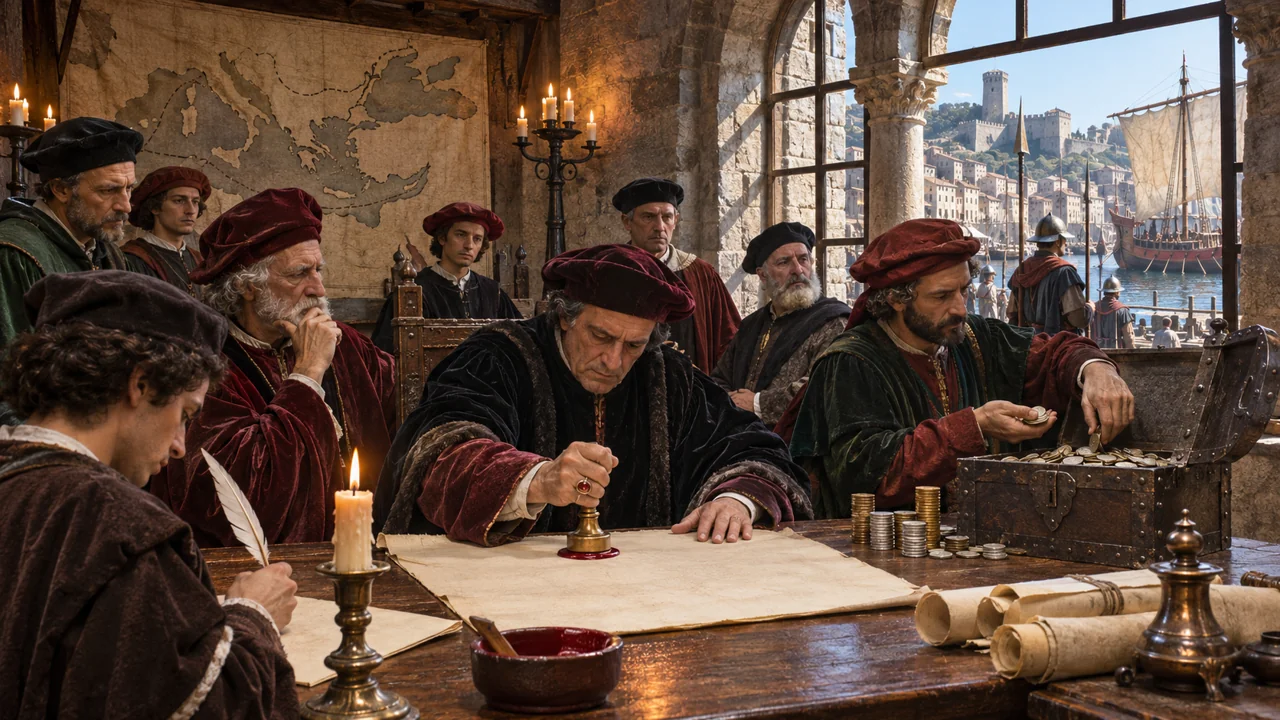
When debt buys power
San Giorgio shows what becomes of a state that can only repay by surrendering its resources. To reassure its lenders, Genoa first gave up its taxes, then its territories. Despite the Franco-Ottoman invasion of 1553, Corsica remained under the Casa's authority until it returned to the Republic in 1562. The line between creditor and public power faded away.
This fusion fascinated observers from Machiavelli to Montesquieu, and historians see in it one of the ancestors of public banks and chartered companies. It also sheds light on very current debates: entrusting debt to a dedicated agency, backing a loan with earmarked revenues, or selling public assets to appease creditors. The Casa lasted almost four centuries before it was abolished in 1805, after Napoleonic France annexed Liguria.
By paying its lenders in taxes, Genoa ended up handing them an island.