The bread that set
the dole
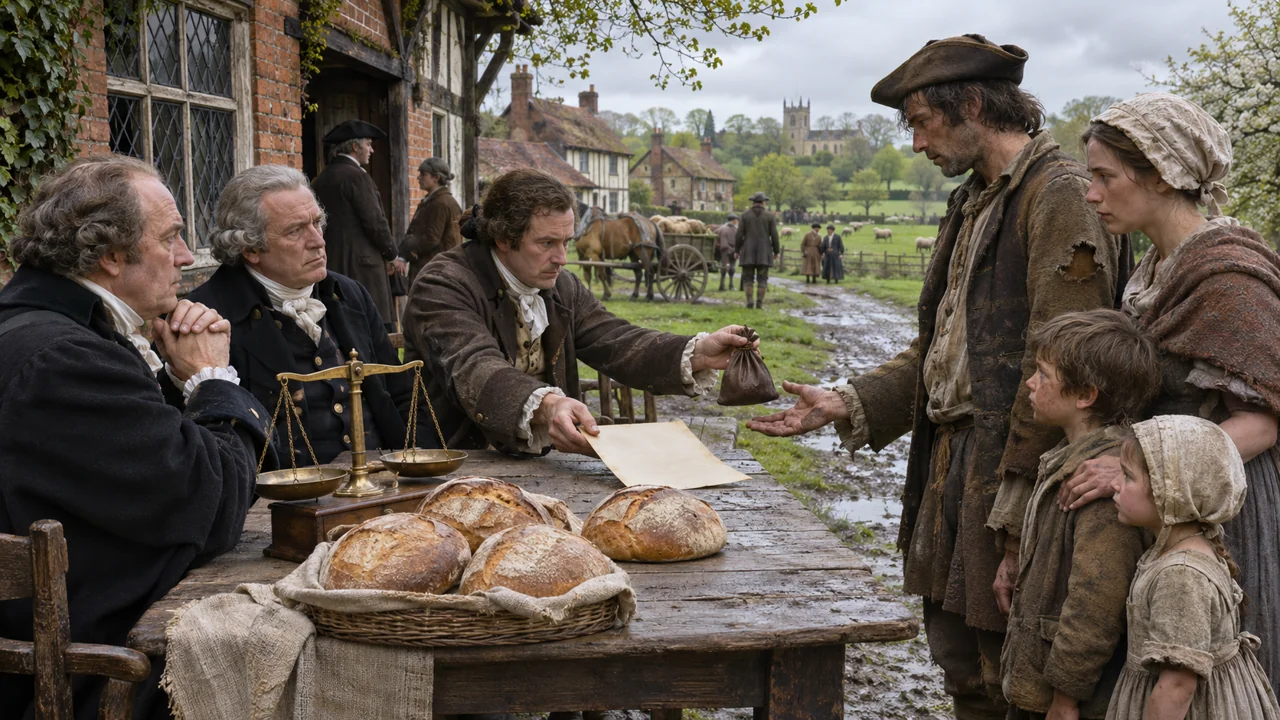
On 6 May 1795, meeting at the Pelican Inn in Speenhamland, near Newbury, the Berkshire magistrates adopted an unprecedented scale: relief paid to poor families would now follow the price of bread. Whatever wages failed to cover, the parish would pay.
A scale indexed to the loaf
England in 1795 was living through a year of dearth. After a poor harvest, and with the war against France weighing on grain, the price of bread was rising far faster than farm wages, and food riots broke out in several counties. Rather than impose a minimum wage on employers, the Berkshire justices chose to set the income below which a labouring family should not fall.
Their answer fitted in a table. When the gallon loaf, a flour loaf of some four kilograms, cost one shilling, a man should have three shillings a week, plus one shilling and sixpence for his wife and for each child. If bread grew dearer, the scale rose with it, in proportion. The gap between that minimum and the wage was met from the parish poor rate. No statute created it: William Pitt tried to make it a national rule and failed. It remained a decision of local magistrates, copied by many parishes in the south of England over the following years.
The detail that changes everything: the scale guaranteed an income, not a wage. A farmer could therefore pay less, knowing the parish would make up the difference, and the cost fell on all local ratepayers, including those who employed no one.
A minimum income before its time
Speenhamland became an intellectual battlefield. The Royal Commission set up in 1832 saw in it a "universal system of pauperism" that discouraged effort and dragged wages down; the 1834 Poor Law that followed banned topping up the wages of able-bodied workers and made the workhouse the rule. In 1944, Karl Polanyi gave it a central chapter of The Great Transformation: in his view, the scale delayed the birth of a true labour market.
Historians later challenged that indictment. In the 1960s, Mark Blaug argued that the commission had chosen its evidence to condemn the old system. The debate remains open, because it raises a question that is still with us: does aid that tops up low incomes support households, or subsidise employers? Discussions of the negative income tax, in-work benefits and universal basic income keep returning to it.
By tying relief to the price of bread, a bench of country justices raised a question our welfare budgets have still not settled.