The tax that only sees
the difference
On 10 April 1954, France adopted a tax designed by a 37-year-old senior tax official, Maurice Lauré. Its principle fits in a single subtraction, and that subtraction would go on to travel the world.
A subtraction against the cascade
After the war, the French state financed reconstruction with taxes levied on each sale at its full price. A product passing through five firms before reaching its buyer was taxed five times, with tax piled upon tax. This "cascading" mechanism penalised long supply chains, pushed firms to do everything in-house rather than specialise, and raised the cost of the machines bought to produce.
A finance inspector who had become deputy director of the General Tax Directorate, Maurice Lauré set out another logic in a 1952 book, La taxe sur la valeur ajoutée. Law no. 54-404 of 10 April 1954 put it into practice in place of the production tax. At first it covered production only: trade and services were brought in by the law of 6 January 1966, applied from 1968.
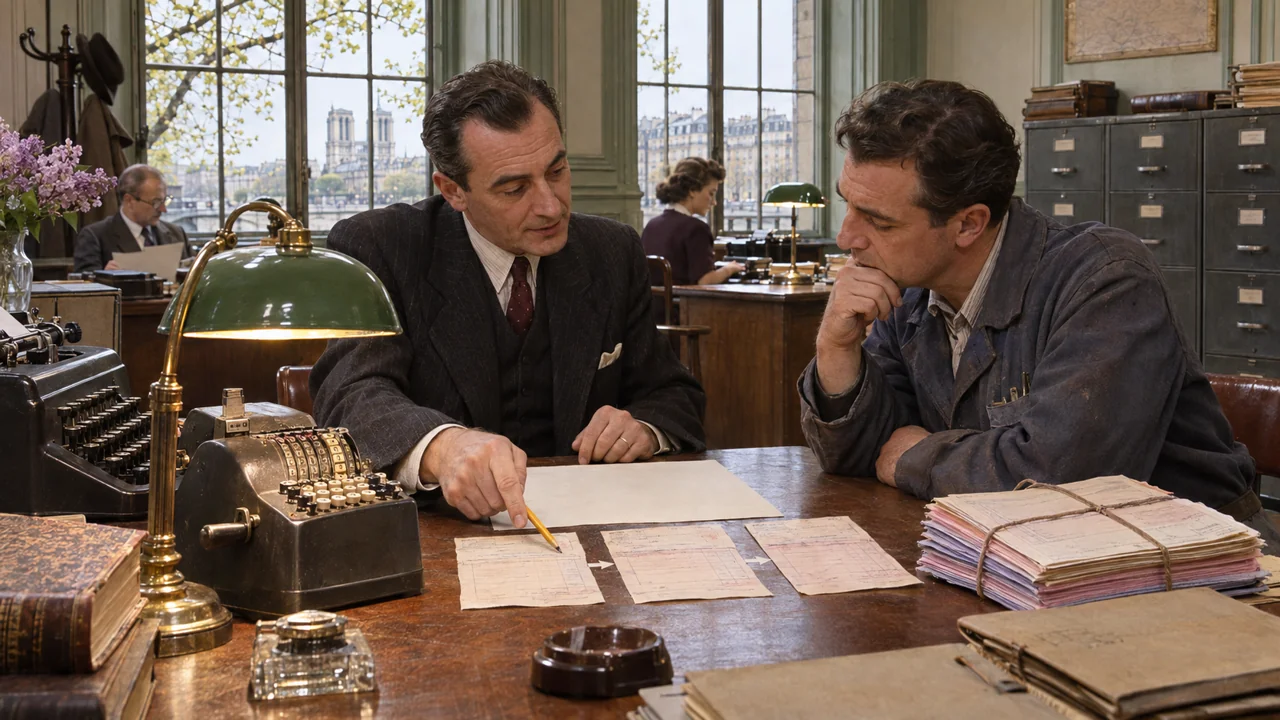
The mechanism lives in an invoice. Take a manufacturer who buys €100 of materials and sells the product for €150. At a 20% rate, he charges his customer €30 of tax but deducts the €20 already paid to his supplier: he remits only €10 to the state, the tax on the €50 he added himself. At each stage only the difference is taxed, and the final consumer bears the whole.
A tax that polices itself
Lauré's invention is less a new rate than an architecture. Since each firm can deduct only the tax shown on its suppliers' invoices, each has an interest in demanding those invoices: the tax relies on taxpayers' own interest to be enforced. Neutrality follows: whether a good passes through two firms or ten, the final burden is the same, and investment, whose tax is deductible, stops being penalised.
Success soon spread beyond France. In 1967 two European directives made it the common basis of indirect taxation in the Community, and more than 150 countries apply it today. In France it has become the state's main source of revenue. The debate that has followed it from the start remains: because it falls on consumption, it takes a heavier share of modest incomes, which save little. Is an efficient tax enough to make a fair one?
The most lasting tax ideas do not add one more tax: they change the way we count.