Generation under digital lock: protecting minors or muzzling free thought?
As parliaments across Europe and the Pacific compete to bar minors from social media, the public debate sidesteps its two greatest flaws: the creation of vast, highly hackable vaults of identities, and placing youth under guardianship at the price of the end of anonymity.
1. The hygienist illusion: moral panic as a political substitute
From the Australian Parliament to the French National Assembly, one slogan echoes: teenagers must be "saved" from the toxicity of digital feeds. Faced with the documented surge in anxiety, cyberbullying and attention disorders, governments have reached for a repressive reflex: an outright ban by law, before 15 or 16.
By pinning public blame on minors' access alone, rather than on the platforms' predatory model (attention capture, infinite scroll, random rewards), power wins an immediate symbolic victory. But this treats the symptom at the expense of the causes, and breeds unprecedented collateral perils. Digital sociology is clear: a clean exclusion removes neither the need to belong nor young people's vulnerabilities; it merely displaces them into the network's blind spots.
- Immediate braking of exposure to cyberbullying.
- Breaking the dopamine loops of infinite scroll.
- Delegating oversight to age-verification algorithms.
- Denial of the right to inform and be informed (Art. 13 of the Convention on the Rights of the Child).
- Loss of socialisation for isolated or vulnerable minors.
- Normalising a society under generalised biometric surveillance.
2. The hacking peril: are these identity vaults really impregnable?
To bar minors or impose binding parental consent, there is no algorithmic miracle: platforms must identify every user with certainty. That forces millions of families to hand government ID, biometric selfies or banking fingerprints to third-party certification services.
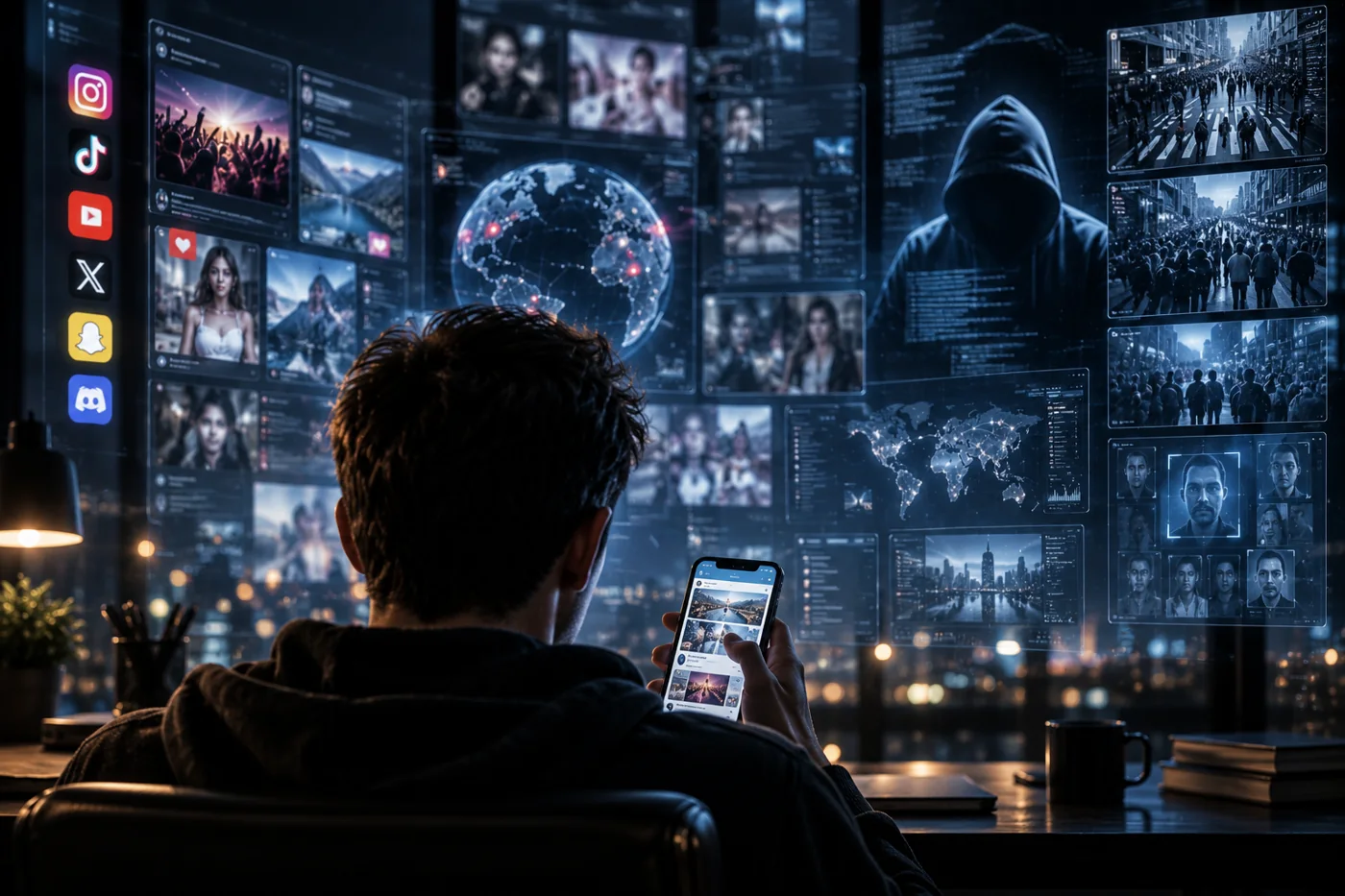
Yet the reality of data breaches is implacable: no system is impregnable, not even a sovereign one. In France alone, the past decade has seen a barrage of successful attacks on ultra-sensitive data. France Travail (formerly Pôle emploi) was hit in quick succession: 10 million people in 2023, then 43 million in 2024, the largest breach in the country's history. Above all, the breach of the health-payment operators Viamedis and Almerys in early 2024 exposed the health data and social-security numbers of 33 million French citizens, nearly one inhabitant in two. If sovereign administrations fall like this, how can commercial platforms, with far fewer resources, be trusted to protect our children's IDs and biometrics? The phenomenon is global: in Australia, the pioneer of the ban, attacks on the operator Optus and the insurer Medibank have already spilled the identities and intimate medical records of millions of residents.
By demanding proof of identity from every citizen to browse, the law creates immense "honeypots" of digital identities and facial biometrics. If hackers already breach sovereign administrations, how can private consortia guarantee the inviolability of our children's IDs? The risk of identity theft and large-scale blackmail has never been so acute.
3. The end of anonymity and the manufacture of groupthink
The direct consequence of this systematic collection is the eradication of the right to pseudonymity. By requiring formal authentication at every digital entry point, the state creates a unified access registry. Such infrastructure, installed under the pretext of protecting childhood, is the dream tool for later political control of dissenting opinions.
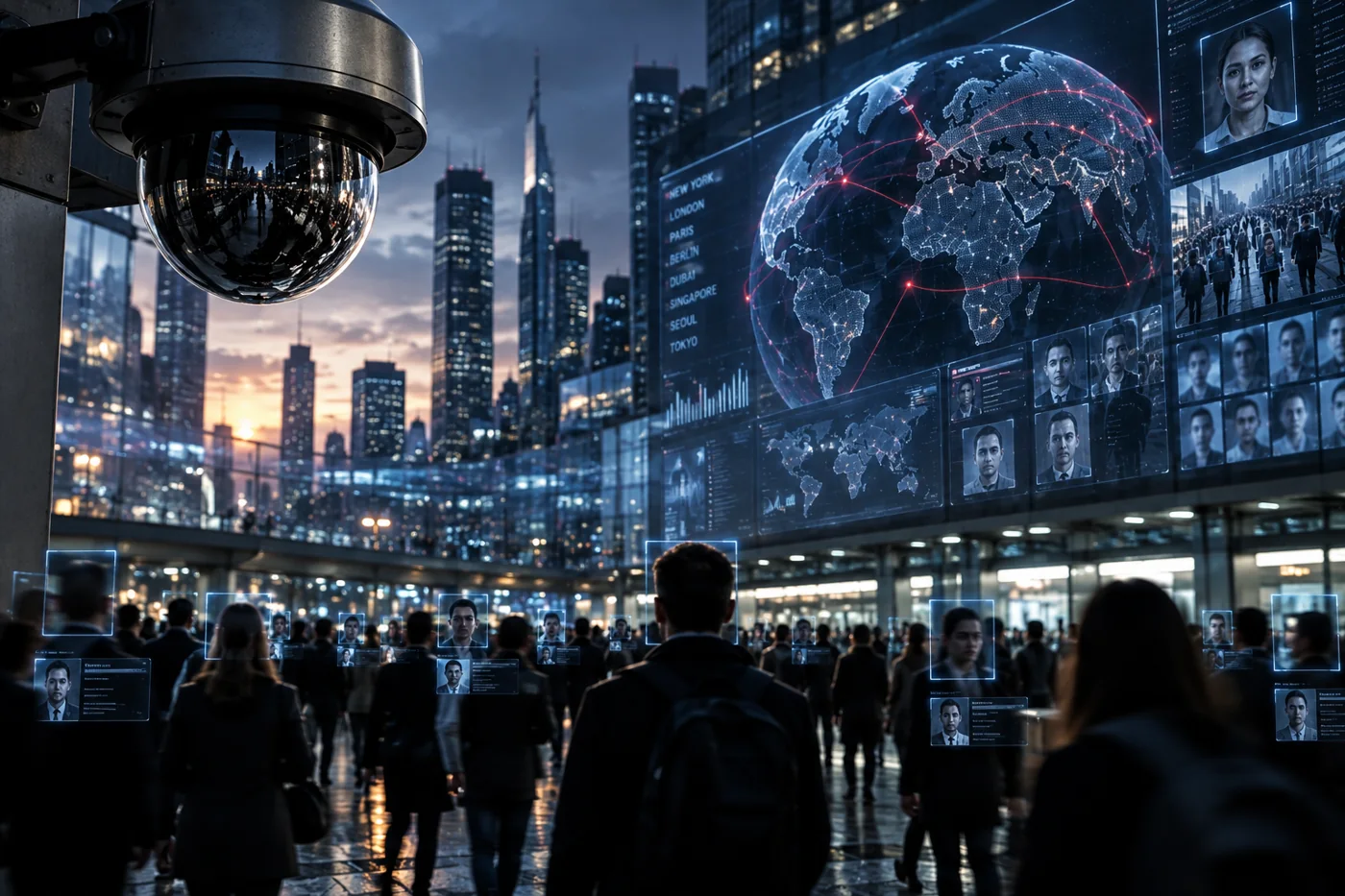
Once every word, every search, every discussion group is tied to a certified identity, self-censorship sets in. Dissenting voices, minors questioning their identity or estranged from their families, lose their protected space of expression.
More insidious still: by barring the youngest from the digital agora, the lawmaker does not protect them from bias, it prevents them from forging their intellectual immune defences. Learning to handle contradiction, to spot disinformation and to weigh opposing arguments is acquired through guided practice, not in a vacuum. Teenagers denied official access:
- consume content secretly through VPNs, beyond any parental or educational mediation;
- suffer a brutal "algorithmic shock" on the day of their digital majority, moving without transition from quarantine to the most aggressive capture mechanisms;
- lock themselves into preformatted narratives, reducing the plurality of public debate.
This temptation, moreover, goes beyond the case of minors. At European level, the proposed CSAR regulation, nicknamed "Chat Control", envisaged scanning private messages to combat child abuse, before being heavily reworked in the face of privacy concerns. The same reflex recurs: faced with a real and serious problem, the first response considered is often a general control measure, rather than targeted means that address the root of the evil.
An infrastructure of generalised identification is not dismantled. What is built to verify an age can tomorrow serve to filter an opinion. Technique always precedes use: the lock installed today for childhood will be available, intact, to any government of tomorrow.
4. The constitutional safeguard: the Council's censure
This prohibitionist zeal ran into a legal wall. While French lawmakers adopted, in July 2026, an in-principle ban on social media for under-15s, the Constitutional Council struck down this central provision in its decision no. 2026-911 DC of 14 August 2026, on referral by the opposition.
"A general and absolute ban on access to social media inflicts on the freedom of expression and communication an interference that is neither suitable, nor necessary, nor proportionate to the objectives pursued."
Constitutional Council, decision no. 2026-911 DC
The Council also worried about the consequences for privacy of an age-verification system lacking sufficient legal safeguards. This censure recalls a cardinal rule: one does not fight the excesses of a tool by suppressing the fundamental freedom to communicate and be informed, protected both by Article 11 of the 1789 Declaration of the Rights of Man and by Articles 13 and 16 of the Convention on the Rights of the Child.
5. Beyond the all-repressive: family, school and safety by design
At the heart of this crisis lies a major confusion: that between instruction and education. In the democratic tradition, the boundaries of responsibility are nonetheless clear.
- Transmits the fundamentals (reading, writing, arithmetic, reasoning).
- Teaches critical thinking and source analysis.
- Provides the keys to understanding the digital world.
- Instils values, respect for others, moderation.
- Sets time limits and regulates screens at home.
- Assumes emotional and civic responsibility for the child.
By entrusting to state locks or age-control algorithms the responsibility of deciding when and how a child accesses the world, parents are implicitly dispossessed of their primary mission. A child's screen cannot be moderated by decree: autonomy is learned at home, through dialogue and clear rules. The state cannot substitute itself for the household without drifting toward authoritarian paternalism.
Rather than building fragile, liberticidal digital fortresses, real emancipation rests on a triptych:
- Dismantle the addiction mechanics: ban infinite scroll, autoplay and random rewards, without banning access to shared knowledge.
- Restore a neutral chronology: a transparent feed rather than sorting by engagement algorithms.
- Enshrine media literacy: make digital self-defence a compulsory school subject from primary level.
Parents who exercise their educational authority, a school that teaches how to decode, strict regulation of platform design: that is real protection. And not a national registry of identities, attractive to hackers and tempting for a power that could turn it against the very citizens it is meant to protect.