The Battle for Green Gold: Why New York Fails Where Seoul Already Recycled 98% of Its Waste
While Western megacities keep burying mountains of methane-emitting organics, South Korea has turned its leftovers into electricity, biogas and fertiliser through 30 years of technological and fiscal rigour.
South Korea's "miracle" is no accident
In Seoul or Busan, throwing away leftovers takes just ten seconds, yet mobilises an industrial machine of surgical precision. In 1996, the country recycled a paltry 2.6% of its food waste. Today it recovers almost all of it. The shift was driven by an acute geographic constraint: a restricted, mountainous territory saturated with landfills, combined with a traditional cuisine rich in broths and side dishes (banchan), very wet and heavy to incinerate.
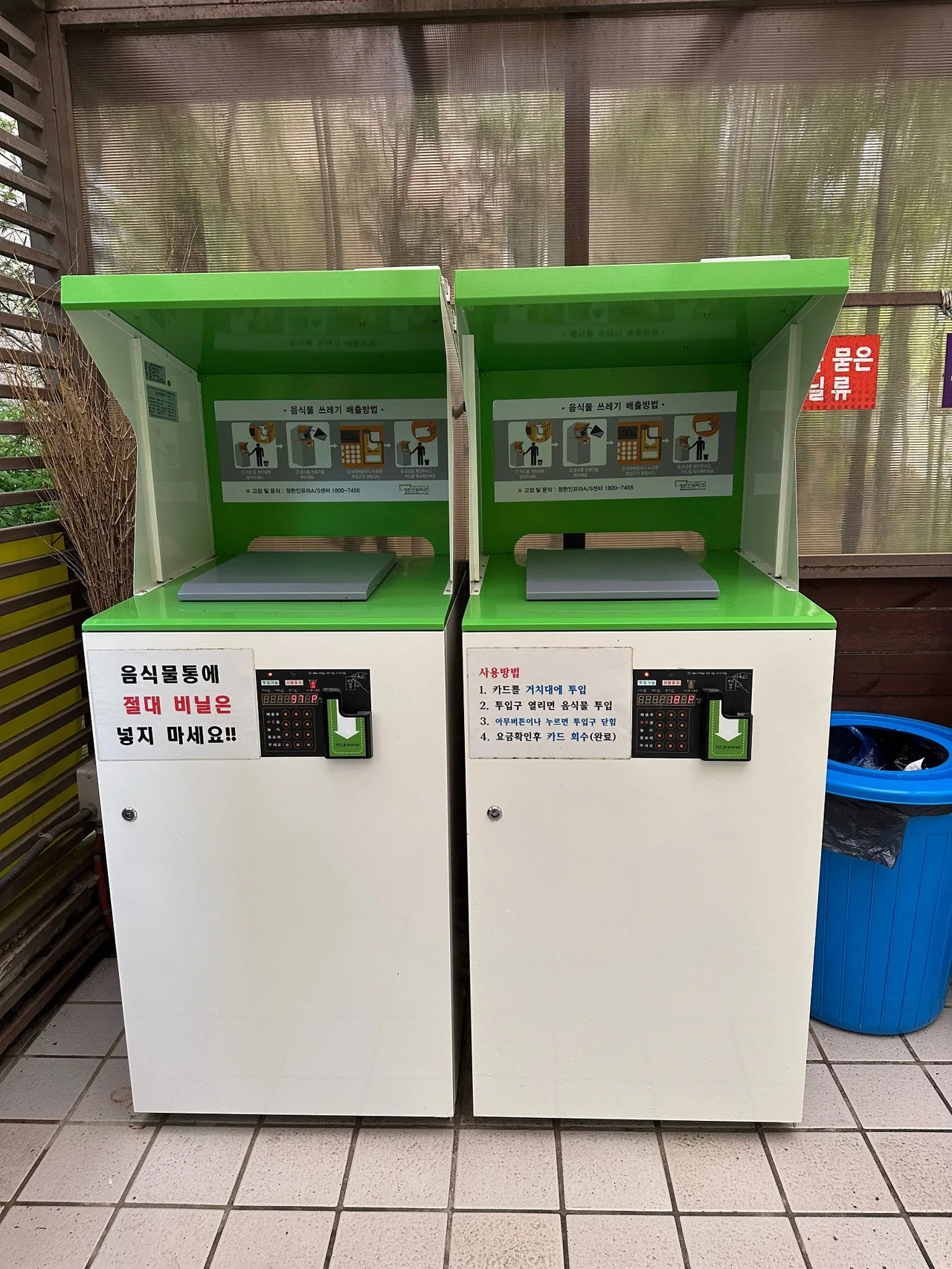
The South Korean secret rests on an unshakeable tripod: individual financial responsibility, a strict legal ban and circular recovery. With the Pay-As-You-Throw principle, seeing the weight and price appear on the RFID station's LCD screen holds the consumer instantly accountable.
A national system charging households by the volume of waste they throw out.
Organic matter is formally banned from public landfills.
Dumping leachate (decomposition liquid) into the ocean is banned, forcing the development of high-performance biomethanation plants.
According to its operators, the Daejeon bioenergy centre alone would convert 70% to 75% of the waste it receives into biomethane, enough to power several thousand homes every day.
The New York maze: infrastructure without discipline
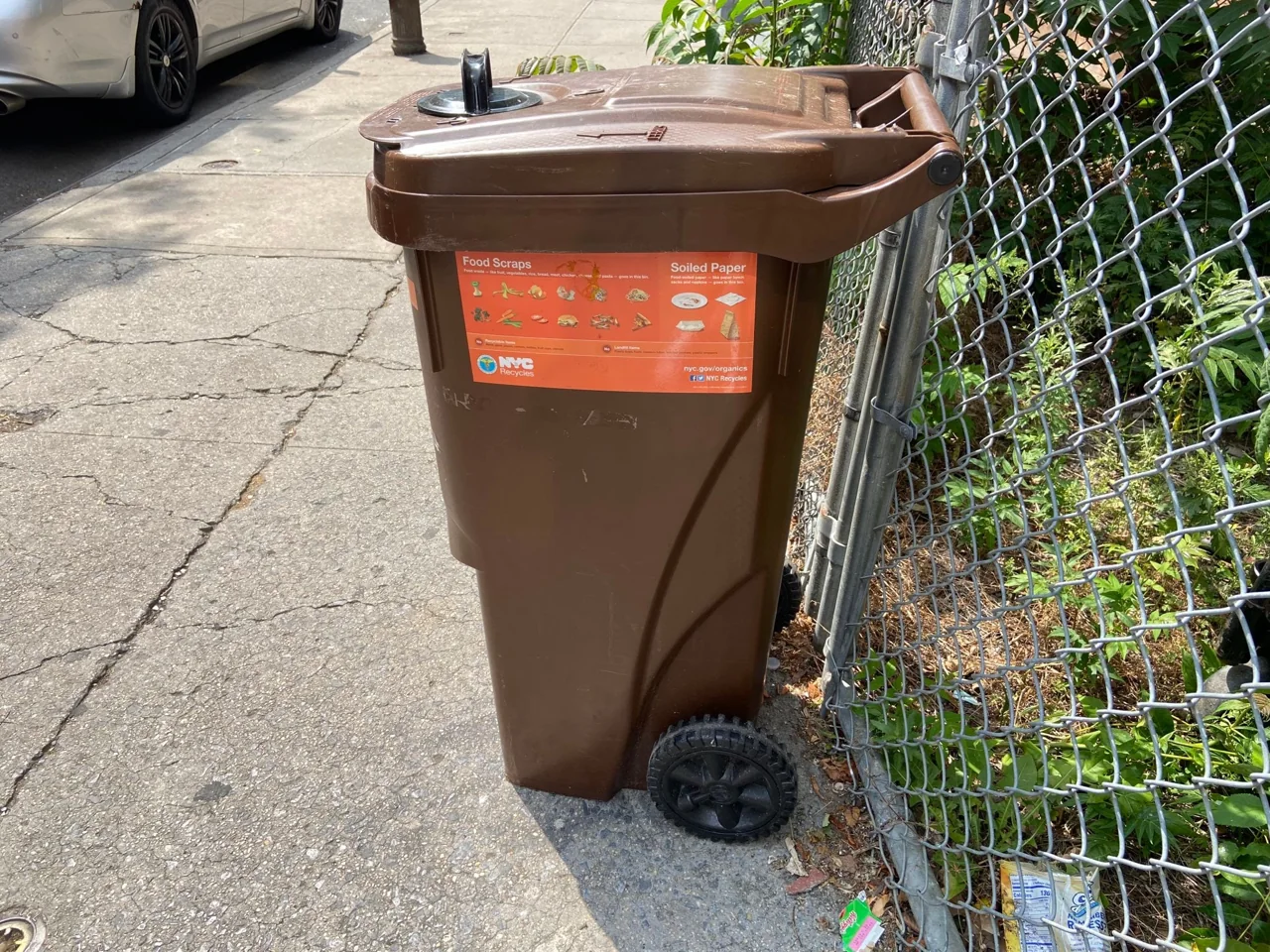
On the other side of the Atlantic, New York City produces more than 1.4 million tonnes of household organic waste every year. Despite rolling out its mandatory collection programme and sealed brown bins designed to resist rodents, the transition is stalling: barely 3.7% of all organics (and 1.2% for food scraps alone) are actually captured and diverted from landfill, according to official FY2024 data.
In the United States, nearly 60% of discarded food still ends up buried in the ground, where it ferments anaerobically, generating methane, a greenhouse gas more than 80 times more warming than CO₂ over 20 years. Why does New York struggle so much?
- No direct financial incentive: New York collection is funded by general taxes. Whether you sort 100 kg or 0 kg, the bill is identical for the tenant.
- Fear of pests: In a city grappling with a rat problem, residents are reluctant to store kitchen waste on landings or in building courtyards.
- Lack of local outlets: Without a dense network of ultra-modern urban digesters, much of the raw compost must travel long distances to be processed.
Where does the rest of the world stand?
If South Korea and New York embody the two extremes of a shared ambition for metropolitan management, other industrialised countries are exploring middle paths:
| Country / Metro | Incentive model | Recovery rate | Operational status |
|---|---|---|---|
| South Korea | Pay-per-gram (RFID) + mandatory official bags | ~98% | Universal national system, honed over 30 years |
| France / EU | Mandatory source separation (AGEC law) | ~35-40% (est.) | Neighbourhood composting bins and shared containers |
| San Francisco (USA) | Municipal fines and differentiated pricing | ~80% | US pioneer (overall diversion rate, all waste combined) |
| New York City | Mandatory kerbside collection but no individual weighing | ~3.7% | Expanding, weak civic buy-in |
The Korean example proves that a shift in societal habits does not rest on households' green goodwill alone: it requires an inseparable pact between technological automation of collection, fair usage-based pricing and closed-loop processing plants.