The country that lived
without banks
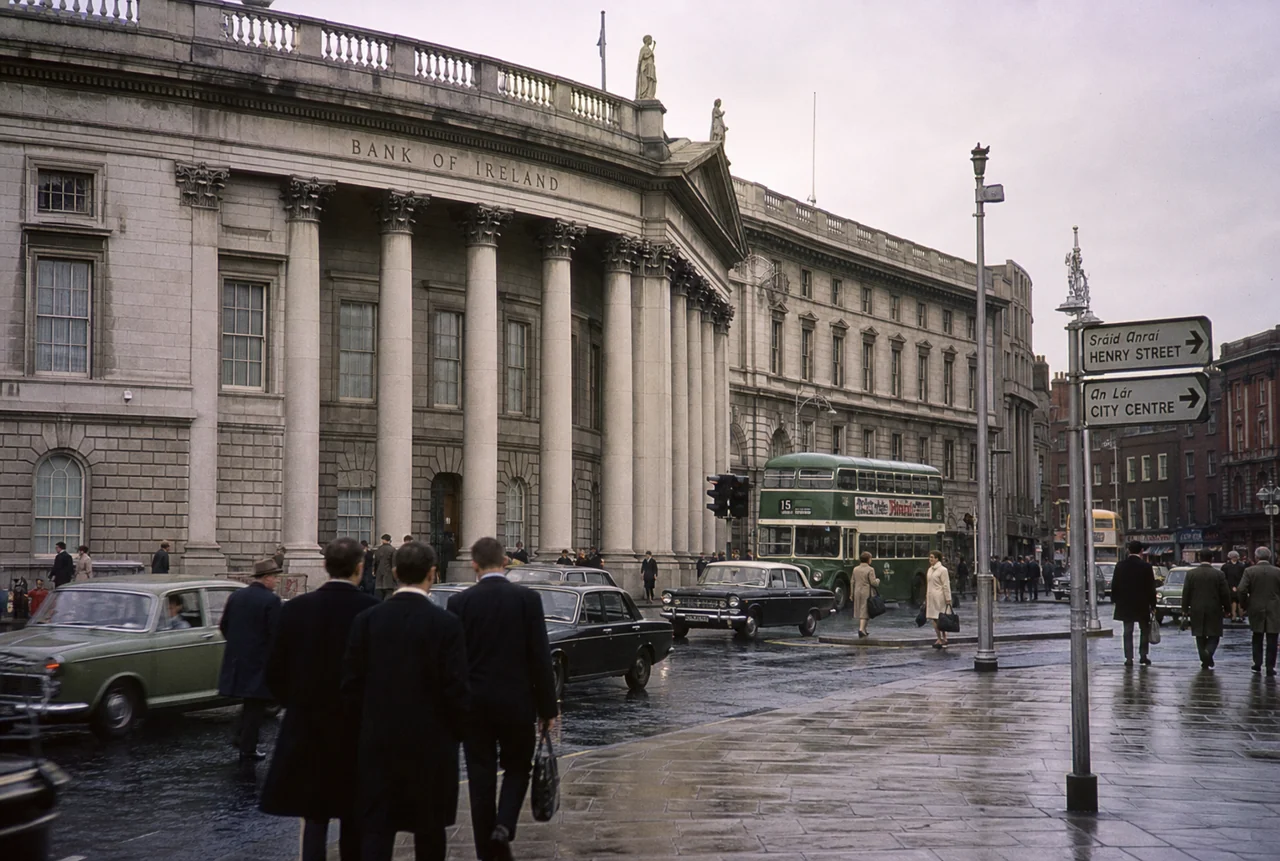
On 1 May 1970 the Irish banks shut their doors. They would not reopen until mid-November. For six and a half months a Western European country paid its wages, filled its tills and settled its debts with no banking system at all. How?
Ten million cheques that never cleared
A pay dispute set the associated banks against the union of their staff. It ended in a lock-out: on 1 May 1970 the Bank of Ireland, Allied Irish Banks, the Northern Bank and the Ulster Bank closed together. The country lost access at a stroke to most of its deposit money. Interbank payments halted; notes already in circulation kept moving, but the central bank no longer had any channel to push more of them where they were needed.
So the Irish went on writing each other cheques. With no counter to present them at, those cheques no longer cleared: they passed from hand to hand as plain IOUs, each holder carrying the risk until a reopening whose date nobody knew. Some ten million cheques, worth over three thousand million pounds in all, changed hands during the dispute without ever being settled.
Who decided whether to take a cheque? The shopkeeper, and above all the publican. The Bank of England's archive preserves the words of a landlord in Balbriggan, near Dublin: he was holding thousands of pounds in cheques and was not worried, because he dealt only with his regulars and turned strangers away. Lacking a balance sheet, he had something no bank had: he saw his debtors every day.
What a bank actually produces
The episode is often told as a happy fable: proof that an economy can do without its banks. The study published in 1978 by the economist Antoin Murphy does find no adverse effect on retail sales. But the picture is more mixed. The Central Bank of Ireland's 1971 survey reports that six firms in ten had to divert staff to improvise substitute payment arrangements, and the official inquiry of 1971 was scathing. Importers and exporters suffered most, having no correspondents abroad; the Bank of England's archive shows emergency arrangements made case by case.
That is the lesson. A bank does not merely make money: it supplies two distinct services, the assessment of counterparty risk and the final settlement of payments. In a country where everyone knows everyone, the first can be supplied by a publican. The second cannot: nothing is ever squared off, debt piles up, and the whole structure holds only through a trust that stops dead at the border. Deposit money is credit; what the bank adds to it is information and a full stop.
A bank does not create trust; it stands in for trust where trust cannot arise.