Black gold is burning: why the crisis suits governments far more than they admit
Diesel at €2.40, stations running dry, a €450m relief package: beneath the veneer of official compassion, the oil price surge hands the French state not so much a windfall as an instrument. Prices ration fuel in its place, employers foot part of its generosity, and the market enforces the transition Brussels has just given up on decreeing.
With every jolt in the oil markets, the political score plays out with clockwork fidelity. Grim-faced ministers, denunciations of the OPEC+ cartel, crisis meetings at the Finance Ministry and pledges to "leave no one by the roadside". September 2026 is no exception: the Strait of Hormuz has been blocked since late February, diesel is nearing €2.40 a litre, and on 22 September the French government unveiled a €450m plan along with a "golden rule" meant to hand any tax surplus back to the public.
Scratch the varnish of this sovereign empathy, however, and the logic of power comes into view: far from being merely a threat to the state, the price surge also turns out to be a formidable lever of public action.
1. A tax on the tax… and a windfall nowhere to be found
For a net importer like France, whose public debt far exceeds the 60% of GDP ceiling set by the European treaties, fuel remains the fuel… of public finances. Its taxation rests on a two-headed structure:
- The energy excise duty (formerly TICPE), a fixed amount per litre: 60.75 cents on diesel and 67.02 cents on SP95-E10 petrol in 2026, in mainland France excluding Corsica. It does not move a cent whether crude soars or collapses.
- 20% VAT, proportional, which applies to the refined product, the retailer's margin… and to the excise duty itself, since EU law requires other taxes to be included in its base. On a 50-litre tank of diesel costing €120.60, this tax on a tax amounts to €6.08.
In all, that tank pays €50.48 to the taxman. Enough to fuel the "windfall" accusation: every 10-cent rise at the pump adds 1.67 cents of VAT per litre, and by 20 September, fuel VAT had brought in €710m more than a year earlier since the conflict began.
Excise duty, however, follows litres, and litres are collapsing: €1.117bn lost over the same period. Net result, according to Public Accounts Minister David Amiel: €407m less in fuel tax revenue. And less than half of the VAT collected at the pump goes to the central government, the rest going to local authorities and social security.
So the windfall is nowhere to be found, and the ministry itself has changed its story over the months: a "surplus" of €270m in April, near balance at the end of August, a €407m shortfall in September. Stopping there would mean adopting the government's own messaging. Yet the real question is perhaps not what the state collects, but what the price achieves on its behalf.
2. Invisible rationing: the convenient cowardice of the market
In modern industrial history, there are two ways to handle a supply shock when stocks shrink:
- State rationing: requisition orders, per-vehicle volume limits, alternate-day driving, even petrol coupons as in wartime.
- Rationing by price: letting the market mechanism destroy the demand that cannot pay.
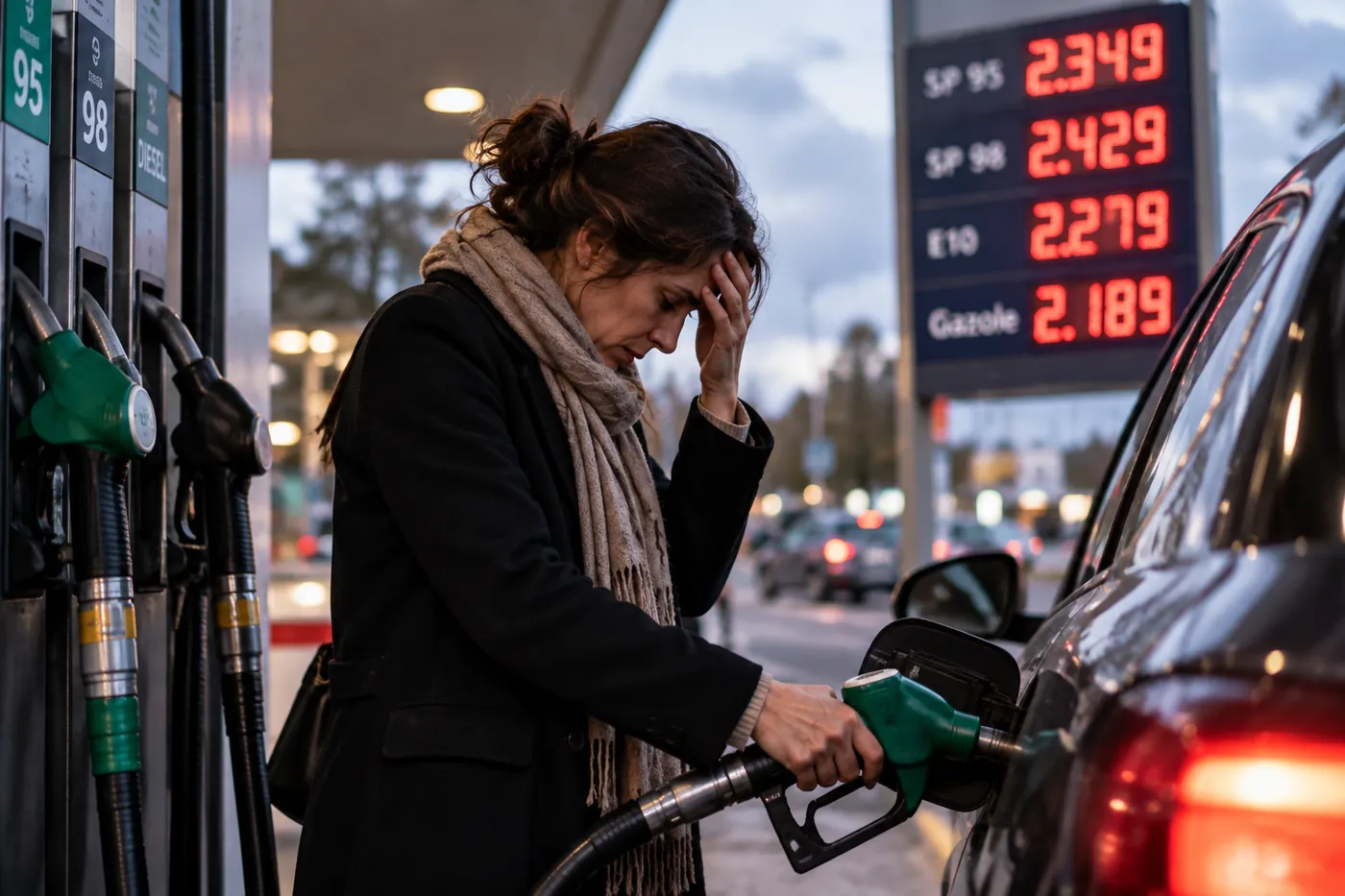
Politically, admitting an inability to supply the nation amounts to a confession of sovereign failure. By letting the litre flirt with €2.40, the state hands the chore of rationing over to the cold laws of supply and demand.
A high price accomplishes what no republican decree would dare to order: it compels motorists to give up their journeys of their own accord, without the government ever having to face accusations of authoritarianism.
September offers a clinical demonstration: from 11 to 20 September, fuel consumption fell 30% compared with the first ten days of the month, and 19% year on year. Split fill-ups, postponed trips, forced car-sharing: price elasticity does the work, without a single ministerial signature.
Where the price is no longer allowed to ration, the queue takes over. TotalEnergies caps its prices (€2.25 for diesel, €1.99 for petrol): its stations are besieged. On 21 September, 17% of France's stations were short of at least one fuel, and 91% of those shortages involved the price-capped brand. Rationing has not disappeared: it has merely traded the wallet for the empty pump.
A safety net does exist. In March, France held 108 days of net imports in strategic stocks, above the legal 90 days, and on 11 March the International Energy Agency decided on the largest coordinated release in its history: 400 million barrels. Drawing on reserves is visible, quantifiable and finite. Letting the price rise, on the other hand, costs the budget nothing.
3. The "saviour" routine: give back little, and make others pay
This is where modern political communication plays its master stroke: turning a constraint endured by all into a gesture of boundless care for a few.
The 22 September plan lays out the whole grammar. The €100 aid for "long-distance commuters", created in April, is extended and widened to 5.5 million people. The energy voucher is brought forward from April to January. And the fuel bonus, raised to €1,000 a year, is exempt from income tax and social contributions… but paid by employers. The plan's most spectacular measure is thus financed by others: the state commits only the revenue it forgoes.
As for the "golden rule" promised for the 2027 budget, it says neither how the surplus would be calculated, nor how it would be returned, nor when. Asked by franceinfo, the Prime Minister's office offered a disarmingly candid formula: "In itself, it can be returned however we like."
The lesson of 2022 has been learned. The across-the-board discount at the pump cost €7.6bn back then, according to the Court of Audit; now, nobody gives back to everyone. The citizen-taxpayer becomes a targeted beneficiary, and public debate no longer turns on how each litre is taxed, but on the size of the cheque graciously handed out.
4. The other silent winners: Washington, Oslo and the forced transition
While France manoeuvres between tax revenue and social anger, others reap direct dividends from rising prices:
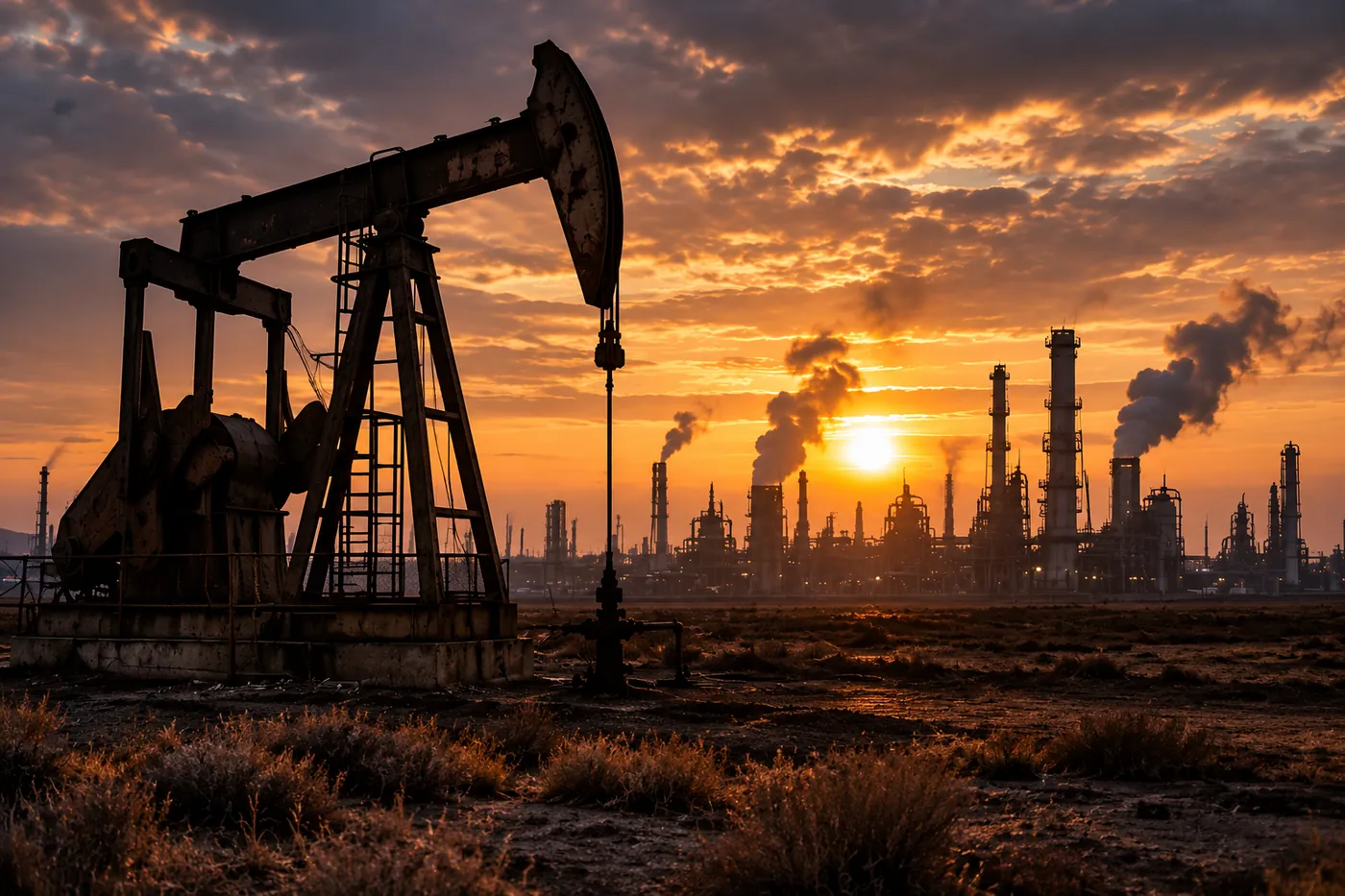
- The United States: the world's largest crude oil producer and, since 2023, its largest exporter of liquefied natural gas, Washington sees every dollar gained by a barrel swell its export earnings, while importing Europe picks up the bill.
- Norway: the kingdom taxes oil profits at 78% (22% corporate tax plus a 56% special tax) and channels the rent into its sovereign wealth fund, the Government Pension Fund Global. Every lurch in crude prices enriches its future generations.
- Europe's decarbonisation agenda: in December 2025, the Commission proposed abandoning the outright ban on new combustion-engine cars in 2035 in favour of a 90% emissions cut; the text is still under negotiation. The irony of timing: just as Brussels loosens the regulatory vice, the barrel tightens it. No green subsidy competes with diesel at €2.40 to persuade a household to look at electric cars or public transport.
Conclusion: the sword of Damocles of the street
This balancing act is not without danger for the executive. The memory of the Yellow Vests, whose revolt erupted in autumn 2018 over a planned increase of a few cents in the carbon tax on fuel, remains branded on the minds of those in power. The calendar is explosive: the budget goes before the National Assembly from 13 October, a presidential election looms in the spring, and the bidding war has already begun (5.5% VAT for the National Rally, a €1.70 price freeze for France Unbowed, scrapping energy-saving certificates for the Republicans).
Above all, rationing by price is anything but neutral: it hits first those who have neither trains, nor remote work, nor an electric car, in other words the France of long distances. Macroeconomic cynicism has its limits: tolerate a price high enough for the market to ration in the state's place, but not so high that the pump once again becomes the detonator of a popular uprising.
On Friday 25 September, Tehran offered to reopen the Strait of Hormuz within seven days, on its own terms. If crude falls back, the state will lose the most discreet of its rationing tools, without ever having had to own it.